Egg White Cocktails: Why They Work and How to Make Them
The science behind the silky foam on a Whiskey Sour, the dry shake technique, and how to substitute aquafaba for a vegan version.
What egg white does in a cocktail
Egg white adds two things to a cocktail: a thick, silky foam on top, and a richer, creamier mouthfeel throughout the drink. The foam forms because egg white proteins — primarily ovalbumin — denature and unfold when agitated with air, trapping bubbles in a stable network. The resulting froth is denser and longer-lasting than carbonation or any other cocktail foaming technique.
The mouthfeel effect is subtler but equally important: even the portion of egg white that doesn't make it into the foam changes the texture of the liquid beneath it, making it feel more full-bodied and less watery. A Whiskey Sour with egg white and one without are visually completely different, but they also feel different on the palate — the egg white version coats the mouth more completely and lingers longer.
The dry shake: why you need to do it twice
The dry shake is the essential technique for any egg white cocktail: you shake all the ingredients together without ice first, then add ice and shake again. The first (dry) shake agitates the egg white proteins into an emulsion with the spirit and citrus without the ice's diluting and chilling effect — the proteins need time and friction to unfold and trap air into a stable foam, and doing this without ice means the agitation goes entirely into emulsifying rather than being absorbed by the ice.
After the dry shake, add ice and shake hard a second time — typically 15–20 seconds — to chill and dilute the drink. Strain into the glass and wait a moment for the foam to settle and rise to the surface. The result should be a thick, stable foam that holds its shape for several minutes. If the foam is thin or watery, the dry shake wasn't long enough — shake harder and longer on the first pass.
Safety and raw eggs
The question of raw egg white safety comes up frequently, and the honest answer is that the risk is very low but not zero. Salmonella contamination of eggs is statistically uncommon in countries with modern egg-production safety standards (less than 1 in 20,000 eggs in the US). The high-proof alcohol in the cocktail provides additional antimicrobial action, though it doesn't fully pasteurize the egg white.
Pasteurized liquid egg whites (sold in cartons at most grocery stores) are a completely safe and functionally identical substitute. They foam slightly less voluminously than fresh egg whites but produce perfectly acceptable results. Pregnant individuals and those with compromised immune systems should use pasteurized egg whites or aquafaba. For everyone else, the risk from a well-made egg white cocktail is genuinely minimal.
Aquafaba: the vegan substitute
Aquafaba is the liquid from a can of chickpeas (or other legumes). Its proteins — primarily legumins and albumins — mimic egg white proteins closely enough that it foams and emulsifies almost identically to egg white in cocktails. Use approximately the same volume as you would egg white (around 0.75–1 oz per cocktail) and apply the same dry shake technique.
The foam from aquafaba is slightly less stable over time than egg white foam — it will collapse a few minutes sooner — but in the context of a cocktail consumed within 5–10 minutes, the difference is negligible. There is a faint savory or beany note to some aquafaba brands that's perceptible in a very simple drink; in a sour with citrus and sweetener, it's completely undetectable. Aquafaba is available in any canned goods aisle and requires no special equipment.
Cocktails that use egg white
The Whiskey Sour is the canonical egg white cocktail — bourbon, fresh lemon juice, simple syrup, and egg white, with a few dashes of Angostura bitters dropped onto the foam. The Pisco Sour is the South American version, with pisco, lime, simple syrup, and egg white, finished with a few drops of Angostura bitters. The Clover Club (gin, lemon, raspberry syrup, egg white) is a beautiful pink Edwardian original. The Ramos Gin Fizz adds heavy cream alongside egg white for a particularly lush, frothy result.
The Amaretto Sour — in its rehabilitated modern form — uses both egg white and a touch of cask-proof bourbon to balance the liqueur's sweetness. The Paper Plane and other equal-parts sours don't traditionally use egg white, but adding it is a legitimate choice for any sour-format drink where you want more texture and visual drama.
Frequently asked questions
Is it safe to drink raw egg white in cocktails?
The risk is very low — Salmonella contamination is statistically uncommon in modern egg production (less than 1 in 20,000 eggs in the US), and the high-proof alcohol in the cocktail provides additional antimicrobial effect. Pasteurized liquid egg whites from a carton are a completely safe alternative with nearly identical results. Pregnant individuals and those with compromised immune systems should use pasteurized egg whites or aquafaba.
What is a dry shake?
A dry shake means shaking all cocktail ingredients including the egg white together without ice first. This agitates the egg white proteins into a stable emulsion with the other ingredients, creating a denser, longer-lasting foam. After the dry shake, add ice and shake again to chill and dilute. Skipping the dry shake produces thin, watery foam that collapses quickly.
What can I use instead of egg white in cocktails?
Aquafaba (the liquid from a can of chickpeas) is the best vegan substitute — it foams almost identically to egg white and is undetectable in terms of flavor in a sour with citrus and sweetener. Use the same volume (about 0.75–1 oz) and the same dry shake technique. Pasteurized liquid egg whites from a carton are a safe, convenient alternative that produces slightly more stable foam than aquafaba.
Cocktails to try
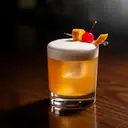
Whiskey Sour
A silky, tart classic where bourbon meets fresh lemon juice and a touch of sweetness, optionally crowned with a frothy egg white foam.

Daiquiri
A pure, elegant expression of rum, brightened with fresh lime and softened with a touch of simple syrup.
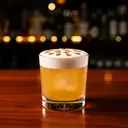
Amaretto Sour
A richly sweet, almond-forward sour transformed by fresh lemon and egg white into something far more nuanced than its reputation suggests.
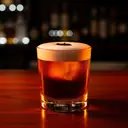
Rum Sour
A silky, tropical spin on the classic sour template: dark rum, fresh lemon, and a foamy egg white give it a rich, creamy texture.

Mezcal Sour
A smoky, earthy riff on the classic sour: mezcal's campfire notes meet fresh lemon juice and agave nectar, crowned with a frothy egg white.