Essential Bar Tools: What You Actually Need
The eight tools that cover every technique in the book — what each one does, why it matters, and what to look for when buying.
The non-negotiables
Cocktail shaker
the most essential piece of kit. A cobbler shaker (three-piece, with a built-in strainer cap) is intuitive for beginners; a Boston shaker (two-piece tin-on-tin or tin-on-glass) is what most bartenders prefer because it seals more reliably and is faster to clean. Either works — pick whichever feels comfortable in your hands. Look for 18/8 stainless steel, which doesn't impart any flavor and handles temperature well.
Jigger
a double-sided measuring cup, typically 1 oz on one side and 1.5 or 2 oz on the other. Precise measurement is the single biggest difference between a balanced cocktail and an unbalanced one. Even experienced bartenders use a jigger — eyeballing pours adds up quickly across a recipe. Japanese-style jiggers have straight sides with interior measurement lines for finer increments; hourglass-style jiggers are faster to flip between measures.
Bar spoon
a long-handled spoon used for stirring drinks in a mixing glass. The length matters — it lets you stir without your hand touching the glass, which would warm the drink. The back of the spoon is also used for floating ingredients on top of a finished cocktail. Choose one with a twisted handle, which makes it easy to spin smoothly between your fingers.
Hawthorne strainer
the flat, spring-edged disc that fits over a shaker tin or mixing glass and holds back ice while you pour. The coiled spring is the key detail — it flexes to fit different vessel diameters. Every shaker-based or stirred drink goes through one of these.
Tools that sharpen your technique
Mixing glass
a heavy, wide-mouthed glass vessel used for stirring spirit-forward drinks like Martinis, Manhattans, and Negronis. You could use a pint glass, but a proper mixing glass has a pour spout and sits stable on the counter. The weight and thick walls keep the temperature steady while you stir. It's worth having one if you make stirred drinks regularly — they look and perform better than improvising.
Fine mesh strainer
also called a tea strainer or fine strainer. Held over the glass alongside the Hawthorne strainer for a 'double strain,' it catches the tiny ice shards and fruit pulp that slip through the larger spring. Essential for any muddled or citrus-heavy drink where you want a silky, clean texture in the glass.
Muddler
a blunt pestle used to crush fresh ingredients — mint, citrus wedges, berries, cucumber — directly in the shaker or glass. Look for one with a flat bottom rather than a toothed one; the teeth tear herb leaves rather than pressing them, releasing bitter chlorophyll. A standard length is around 10 inches, which reaches comfortably into a tall glass.
Hand citrus juicer
a hinged press that extracts juice from half a lime or lemon with far more force and efficiency than squeezing by hand. Fresh juice is critical to any citrus-forward drink, and this tool makes getting it effortless. A Mexican elbow-style press (with a perforated cup) is the most common; place the citrus cut-side down in the cup so the dome pushes juice through the holes cleanly.
Small tools with a big impact
Y-peeler or channel knife
two inexpensive tools for working with citrus garnishes. A Y-peeler cuts wide, flat swaths of zest for expressed twists — press the peel skin-side down over the drink to release a mist of fragrant oil before dropping it in. A channel knife cuts a thin, elegant spiral of zest for a decorative spiral garnish. Either costs a few dollars and adds a level of finish that makes a real difference in how a drink looks and smells on arrival.
Large-format ice tray
standard freezer ice cubes melt quickly, diluting a carefully made drink faster than intended. A silicone tray that makes 2-inch cubes produces ice that chills without over-diluting — the larger surface-area-to-volume ratio means slower melt. This matters most for stirred, spirit-forward drinks like Old Fashioneds and Negronis served on a single rock. A bag of cocktail picks or small skewers rounds out the kit, useful for spearing garnishes like olives, cherries, or citrus twists to lay cleanly across the glass.
Frequently asked questions
Do I need both a cobbler shaker and a Boston shaker?
No — pick one. A cobbler shaker (three-piece with a built-in strainer cap) is easier for beginners because everything is self-contained. A Boston shaker (two-piece tin-on-tin or tin-on-glass) is what most working bartenders use because it seals more reliably, is faster to open after shaking, and is easier to clean. Either will produce the same drink.
What is a Hawthorne strainer?
A Hawthorne strainer is the flat disc with a coiled spring around its edge that fits over a shaker tin or mixing glass. The spring flexes to grip different-sized vessels. It holds back the ice while you pour the finished drink into the glass. It's the standard strainer for almost every shaken or stirred cocktail.
Do I need a mixing glass, or can I use a regular glass?
A pint glass works fine as a substitute, but a dedicated mixing glass has a pour spout, sits more stably, and has thicker walls that hold temperature better during a long stir. If you make stirred drinks like Martinis or Manhattans regularly, a proper mixing glass is a worthwhile upgrade — they're typically $20–40.
Cocktails to try

Old Fashioned
The original cocktail. A spirit-forward showcase of whiskey, mellowed slightly with sugar and aromatic bitters.

Negroni
A sophisticated Italian aperitif. Perfectly balanced between the botanical gin, sweet vermouth, and bracingly bitter Campari.

Manhattan
A smooth, spirit-forward blend of whiskey and sweet vermouth, accented with aromatic bitters. Dark and mysterious.
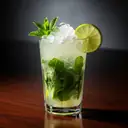
Mojito
A vibrant Cuban classic that muddles fresh mint and lime with light rum, topped with sparkling water.