Cognac and Brandy: A Beginner's Guide
What brandy is, how cognac and armagnac differ, what the VS/VSOP/XO age grades mean, and which cocktails show off each style best.
What brandy is
Brandy is simply distilled wine — or, more broadly, any spirit made by distilling fermented fruit juice. The most common base is grape wine, but apple brandy (Calvados from Normandy, applejack from the US), pear brandy, and fruit brandies from cherries, plums, or apricots are all legitimate members of the family. What they share is the flavor complexity of the source fruit, concentrated and transformed by distillation and usually elevated further by oak aging.
When a cocktail recipe calls for 'brandy' without specifying, it almost always means a grape brandy — and specifically cognac if available, since it's the most widely available quality benchmark in the category. That said, a good Spanish brandy de Jerez or domestic American grape brandy will produce nearly identical results in most classic recipes.
Cognac vs. armagnac: the two great French grape brandies
Cognac is the most famous brandy in the world, produced in the Charentes region of southwest France from Ugni Blanc grapes. It must be double-distilled in traditional copper pot stills and aged in Limousin or Tronçais oak barrels. The result is a brandy that tends toward elegance and refinement: fruity, floral, and round, with oak adding vanilla and dried fruit notes over time.
Armagnac, from the neighboring Gascony region, is older than cognac and produced differently — single-distilled in a column still, typically aged in black oak, and often made from a wider variety of grapes. The result is a noticeably more rustic, complex spirit with more earthiness, dried fruit, and regional character. Armagnac is beloved by enthusiasts for this expressiveness, though it's far less widely distributed than cognac. In cocktails, either works beautifully — use what you can find.
Understanding VS, VSOP, and XO
Cognac's age grades are regulated by French law and refer to the minimum age of the youngest spirit in the blend. VS (Very Special) must be aged at least two years — it's the mixing grade, bright and fruity, ideal for cocktails. VSOP (Very Superior Old Pale) requires at least four years of aging, adding more complexity and smoothness, and works equally well in cocktails or neat. XO (Extra Old) must be aged a minimum of ten years, and these bottles are typically best appreciated neat or on a single large rock, where their depth and nuance are most perceptible.
For cocktails — a Sidecar, Brandy Alexander, Horse's Neck, or Brandy Crusta — reach for a VS or VSOP. Pouring XO into a shaker with lemon juice is not wrong, but it's expensive and the subtleties of long aging don't survive ice and citrus.
Pisco: South America's grape brandy
Pisco is a South American grape brandy, made in Peru and Chile from aromatic Muscat-family grapes, and it occupies a distinctive corner of the brandy world. Unlike cognac, pisco is unaged (or rested in neutral containers), so it retains a much more floral, grapey, aromatic character without oak influence. It's the basis for the Pisco Sour — one of the most famous cocktails in the Americas — and the Pisco Punch, a Gold Rush-era San Francisco classic.
Peruvian and Chilean piscos are made differently enough to be considered distinct categories. Peruvian pisco is made from 8 permitted grape varieties and cannot be diluted after distillation; Chilean pisco can be made from more varieties and aged. Both are worth trying if you come across them.
Classic brandy cocktails
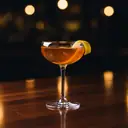
The Sidecar is the canonical brandy cocktail: cognac, triple sec, and fresh lemon juice in a 2:1:1 ratio, shaken and served in a sugar-rimmed coupe. Its ancestors are the Brandy Crusta (the 1850s New Orleans original that inspired it) and the Brandy Daisy, the 1870s template that eventually became the Margarita when applied to tequila. The Brandy Alexander adds cream and crème de cacao for a dessert-style drink; the Vieux Carré layers cognac with rye whiskey, sweet vermouth, and Bénédictine in a classic New Orleans stirred format.
Brandy is also the spirit behind some of the oldest American punches — Fish House Punch, Milk Punch, and the original Eggnog — and remains the base of choice for the Stinger (cognac and crème de menthe) and the classic Champagne Cocktail, in which a sugar cube soaked in bitters sits in a flute of champagne with a float of cognac.
Frequently asked questions
What's the difference between brandy and cognac?
Cognac is a type of brandy — specifically, a grape brandy made in the Charentes region of France according to strict regulations (double pot-still distillation, Limousin oak aging). All cognac is brandy, but not all brandy is cognac. The term 'brandy' covers all distilled fruit spirits: grape brandy from Spain or the US, apple brandy (Calvados), pisco from South America, and more.
Can I use regular brandy instead of cognac in a Sidecar?
Yes. A VS or VSOP cognac is the classic choice, but a good Spanish brandy de Jerez, a quality American grape brandy, or an armagnac all work well. The key is using a quality grape brandy — cheap cooking brandy will produce a noticeably worse result. Pisco is a different enough spirit that it changes the drink's character significantly.
What does XO mean on a cognac bottle?
XO (Extra Old) means the youngest spirit in the blend has been aged a minimum of ten years in oak. These bottles are typically more complex, smooth, and expensive — best appreciated neat or on a single large rock rather than in cocktails, where the subtleties of long aging are hard to detect through lemon juice and ice.
Explore related categories
Cocktails to try
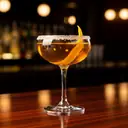
Brandy Crusta
The elegant 1850s original that inspired the Sidecar and the Margarita: cognac, orange curaçao, and lemon in a sugar-crusted coupe.
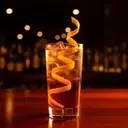
Horse's Neck
A stately brandy highball spiraled with a long lemon peel that curls over the glass like a horse's neck — refreshing, aromatic, and endlessly elegant.
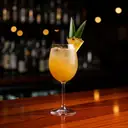
Pisco Punch
San Francisco's legendary Gold Rush cocktail: pisco, pineapple, lemon, and sugar — once called the most delicious drink in the world.
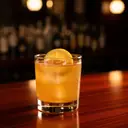
Brandy Daisy
A forgotten 19th-century classic: cognac sharpened with lemon juice, sweetened with orange curaçao, and brightened with a splash of soda.
Sidecar
An elegant, citrus-forward classic balancing cognac with orange liqueur and fresh lemon.