Alcohol Proof and ABV: What They Mean and Why They Matter
What proof and ABV actually mean, where the terms came from, and why alcohol percentage matters for mixing cocktails.
What ABV means
ABV stands for alcohol by volume — the percentage of the total liquid that is pure ethanol. If a bottle is labeled 40% ABV, 40% of its contents are alcohol and 60% is water and other compounds. This is now the internationally standardized way to express alcohol content, used consistently on spirit and wine bottles in most countries.
ABV is a simple measurement made during production — a hydrometer or refractometer measures the density of the liquid before and after fermentation and distillation to determine how much alcohol is present. All the numbers that matter in cocktail ratios — how strong a drink is, how much dilution it needs, how much water ice melt adds — are directly derivable from the ABVs of the constituent ingredients.
What 'proof' means and where it came from
Proof is an older American unit that equals exactly twice the ABV: a spirit labeled 80 proof is 40% ABV; 100 proof is 50% ABV; 120 proof is 60% ABV. The conversion is always straightforward: proof ÷ 2 = ABV. The term survives primarily on American spirits labels alongside ABV, and in casual speech ('high-proof,' 'cask strength').
The historical origin of 'proof' is colorful: British sailors in the 17th and 18th centuries needed a way to test that their rum hadn't been watered down by dishonest merchants. The test was to mix the spirit with gunpowder and attempt to ignite it — if it burned, the spirit was 'at proof' or above. This crude test corresponds approximately to 57% ABV (114 proof), which is why some premium whiskeys still market themselves as 'Navy strength' at that level. The UK eventually replaced this system with percentage by volume; the US retained the proof system alongside ABV.
Standard ABV ranges by spirit category
Knowing where each spirit category sits on the ABV spectrum is useful for estimating drink strength and understanding dilution needs. Beer is typically 4–8% ABV; most wine is 11–14%; fortified wines (port, sherry, vermouth) are 15–22%; aperitivo liqueurs like Campari and Aperol are 11–25%; most standard spirits (vodka, gin, rum, tequila, whiskey) are bottled at 40–43% ABV; higher-proof expressions and cask strength bottlings run from 50–65%+ ABV.
Navy strength gin (57.1% ABV) and barrel-proof bourbon (often 55–65% ABV) are above standard proof and require more dilution — more ice, or more mixer — to achieve the same balance as a standard-proof version. This is why barrel-proof whiskeys and cocktail ratios need adjustment: a standard Old Fashioned ratio built with a 65% ABV bourbon will be noticeably hotter and more intense than the same ratio with a 40% ABV bourbon.
Why proof matters in cocktails
ABV affects every variable in a cocktail's design. Higher-proof spirits carry more flavor intensity per milliliter — they're extracted more aggressively from barrel wood, and their higher alcohol content acts as a stronger solvent that extracts more congeners and flavor compounds. A barrel-proof bourbon in an Old Fashioned will need less spirit by volume to achieve the same flavor impact, or proportionally more dilution (more ice, a slightly longer stir) to bring it to the same balance.
In a shaken cocktail with citrus, a higher-proof spirit can stand up to more lemon juice — which is why some bartenders adjust the sour ratio when switching between a standard-proof gin and a navy-strength gin. The principles are: higher ABV → more dilution needed to achieve the same mouthfeel; higher ABV → more flavor intensity per unit volume; higher ABV → more resistance to being overpowered by sweet or sour ingredients.
Frequently asked questions
What does 80 proof mean?
80 proof means 40% ABV — alcohol by volume. Proof in the US is exactly twice the ABV percentage. 80 proof is the standard bottling strength for most commercial vodka, gin, rum, and whiskey. 100 proof is 50% ABV; 120 proof is 60% ABV.
Is higher proof always stronger-tasting?
Generally, yes — higher-proof spirits carry more flavor intensity because alcohol extracts and carries more aromatic and flavor compounds from grains, barrels, and botanicals. But 'stronger-tasting' isn't the same as 'better' — a higher-proof spirit in a cocktail needs more dilution to achieve the same balance as a standard-proof version. Well-balanced barrel-proof whiskeys are complex and rewarding, but they require adjustment in cocktail ratios.
Where does the word 'proof' come from?
From 17th and 18th-century British naval practice, where sailors tested rum by mixing it with gunpowder and attempting to ignite it. If it burned, the spirit was 'at proof' — approximately 57% ABV. The US retained proof (= 2× ABV) as a labeling standard alongside ABV; most other countries dropped it in favor of percentage by volume alone.
Cocktails to try
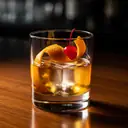
Old Fashioned
The original cocktail. A spirit-forward showcase of whiskey, mellowed slightly with sugar and aromatic bitters.
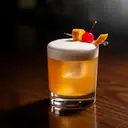
Whiskey Sour
A silky, tart classic where bourbon meets fresh lemon juice and a touch of sweetness, optionally crowned with a frothy egg white foam.
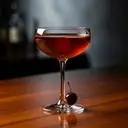
Manhattan
A smooth, spirit-forward blend of whiskey and sweet vermouth, accented with aromatic bitters. Dark and mysterious.
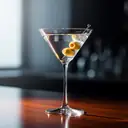
Martini
The definitive gin cocktail, stirred with dry vermouth and garnished with an olive or a lemon twist.