Tiki Cocktails: History, Flavors, and How to Make Them
The mid-century American fantasy of tropical escape that produced some of the most complex — and most delicious — cocktails ever invented.
What Tiki is
Tiki is a mid-20th-century American cocktail movement built around an idealized, thoroughly romanticized vision of Polynesia and the South Pacific. It was never historically authentic — it was a fantasy constructed in California in the 1930s and 1940s, drawing on imagery from multiple Pacific cultures simultaneously while serving rum-based cocktails of extraordinary complexity to Americans who'd never set foot outside the mainland.
That inauthenticity hasn't stopped Tiki from producing some of the most technically ambitious and genuinely delicious cocktails in the canon. The movement's greatest figures — Donn Beach (Don the Beachcomber) and Victor Bergeron (Trader Vic) — were obsessive craftsmen who jealously guarded their recipes and pushed the limits of what cocktail complexity could mean, long before the modern craft cocktail renaissance was imaginable.
Donn Beach and Trader Vic: the two founding fathers
Donn Beach opened Don the Beachcomber in Hollywood in 1934 — widely considered the first Tiki bar. A self-taught bartender and obsessive inventor, he created dozens of complex rum drinks, often using three or four different rums in a single cocktail to achieve specific flavor profiles. He secured his recipes by keeping individual components in numbered bottles, so employees couldn't reconstruct or replicate them.
Victor Bergeron opened Trader Vic's in Oakland in 1934 and later claims to have invented the Mai Tai there in 1944. The two men spent decades disputing who invented what, but together they defined the Tiki aesthetic: bamboo-lined bars, carved Polynesian-style figures, elaborate ceramic mugs, and cocktails festooned with paper umbrellas, plastic monkeys, and impractical amounts of fruit garnish. In a serious cocktail context, all of those elements remain entirely in place — Tiki has always known it's theatrical.
Key ingredients: rum, orgeat, falernum, and tropical juices
Rum is the foundational Tiki spirit, often used in multiple styles within a single drink. Aged Jamaican rum (rich, funky, molasses-forward) provides backbone; white Cuban-style rum adds brightness; aged Barbadian rum contributes smoothness; rhum agricole from Martinique brings grassy, vegetal complexity. Donn Beach's Zombie uses three different rums; Trader Vic's Mai Tai uses two. This blending approach creates depth that no single rum can match.
Orgeat is the other non-negotiable Tiki ingredient: a sweet, slightly creamy syrup made from almonds, sugar, and orange flower water. Its rich, nutty sweetness is distinctive and largely non-substitutable with plain simple syrup. Falernum is a spiced syrup or liqueur from Barbados, combining lime, almond, ginger, clove, and other spices — essential in the Zombie and many other Tiki drinks. Fresh pineapple and lime juice round out the pantry.
The must-know Tiki cocktails
The Mai Tai is the queen of Tiki: aged rum, orange curaçao, orgeat, and fresh lime, served over crushed ice with a mint sprig and lime wheel. Trader Vic's original recipe uses no fruit juice beyond fresh lime — it's a spirit-forward, intensely almond-citrus drink, not the syrupy punch bar versions that soured its reputation in the 1980s.
The Zombie (Donn Beach, 1934) is the most complex and potent Tiki cocktail: three to four types of rum, Pernod, grenadine, fresh juices, and cinnamon syrup, served in a zombie glass over crushed ice with a floated Demerara rum. It's limited to two per customer at Don the Beachcomber, for obvious reasons. The Three Dots and a Dash — named for the Morse code letter V (for victory) — was Donn Beach's WWII-era toast to Allied victory: rhum agricole, allspice dram, honey, and lime garnished with three cherries and a pineapple chunk.
Making Tiki at home
Building a basic Tiki home bar requires a few key bottles beyond your regular spirits: a bottle of orgeat (Fee Brothers, Small Hand Foods, or homemade), a bottle of allspice dram (St. Elizabeth or homemade), Angostura bitters, and a selection of rum styles. You don't need a dozen rums immediately — start with a good aged Jamaican (Appleton 12, Plantation Original Dark) and a white rum, and expand from there.
Crushed ice is essential for authentic Tiki service. A Lewis bag (a canvas bag you bash with a mallet) is the traditional tool; a blender pulsed briefly also works. The crushed ice isn't aesthetic — it chills quickly, provides rapid dilution, and holds the elaborate garnishes that are part of Tiki's theatrical presentation. Don't skimp on the garnish: a paper umbrella, a carved pineapple chunk, and a spent lime shell are part of the genre's joy.
Frequently asked questions
What makes a cocktail a Tiki cocktail?
Tiki cocktails are typically rum-based (often with multiple rums), use tropical juices and sweet tropical syrups like orgeat and falernum, are served over crushed ice, and come with elaborate garnishes. The broader Tiki aesthetic also includes exotic, theatrical presentation — ceramic mugs, paper umbrellas, carved fruit. Complexity and layering of flavors across multiple spirits are defining characteristics.
What is orgeat and can I substitute anything for it?
Orgeat is a sweet, slightly creamy syrup made from almonds, sugar, and orange flower water. Its distinctive nutty richness is essential in the Mai Tai and many Tiki drinks. You can substitute almond syrup (like Monin Almond) for most purposes, but it's thinner and less complex. Simple syrup plus a drop of almond extract is a last resort. Homemade orgeat from blanched almonds is the best option if you use it frequently.
Who invented the Mai Tai?
Trader Vic (Victor Bergeron) created the Mai Tai at his Oakland restaurant in 1944, using 17-year-old J. Wray & Nephew rum, fresh lime, orange curaçao, orgeat, and a float of dark rum. Donn Beach disputed this claim, as he disputed many things, but Trader Vic's account is the most documented and widely accepted. The name means 'out of this world' in Tahitian.
Explore related categories
Cocktails to try
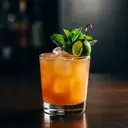
Mai Tai
A rich tiki classic layering two rums with orgeat, lime, and orange liqueur for a nutty, tropical punch.
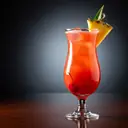
Rum Punch
A crowd-pleasing mix of rum and tropical juices, sweet and easy-drinking with a citrus kick.
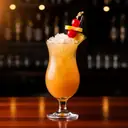
Three Dots and a Dash
A Tiki WWII classic: three dashes of rum, allspice dram, honey, and lime — named after the Morse code signal for 'V' (victory).
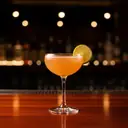
Hemingway Daiquiri
Ernest Hemingway's beloved double-rum daiquiri: drier and more complex than the classic, cut with grapefruit and sweetened with maraschino.
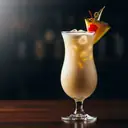
Pina Colada
A rich, tropical vacation in a glass. Light rum blended with sweet coconut cream and tart pineapple juice.